
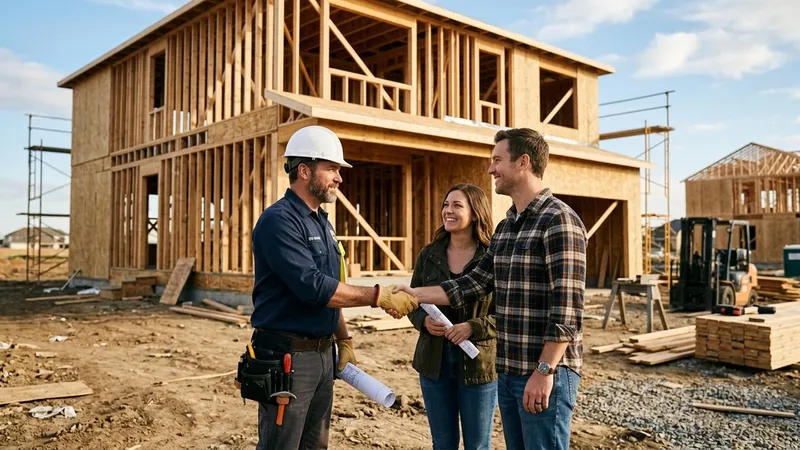
For a builder, those four letters come down to proof a buyer can check, such as the homes you've finished, the people who run your jobs, and what past clients say on sites you don't control. At HomeBuilderSEO.com we treat E-E-A-T as an inventory of evidence that has to exist on your website and off it, and we build it as one layer of home builder SEO inside your broader organic search program.
How Google Defines E-E-A-T for Home Builders
E-E-A-T comes from Google's Search Quality Rater Guidelines, the manual for the people Google hires to grade search results. As of October 2026, the current edition is dated September 11, 2025, and it names Trust as the most important member at the center of the E-E-A-T family. Experience, Expertise, and Authoritativeness support the assessment of Trust, and the guidelines state that an untrustworthy page has low E-E-A-T no matter how experienced or expert it seems.
The guidelines tell raters that no single rating can directly change how a page appears in Google Search, and Google's guide to creating helpful, reliable, people-first content says E-E-A-T itself isn't a specific ranking factor, though its systems use a mix of factors that identify content with good E-E-A-T. There's no E-E-A-T score to raise, so the practical job is publishing the evidence those factors look for. The table maps each letter, as the guidelines describe it, to that evidence.
| Letter | What raters consider | Builder evidence |
|---|---|---|
| Experience | First-hand experience | Pages for homes you built |
| Expertise | Knowledge or skill | Named, licensed people |
| Authoritativeness | Known as a go-to source | Associations, press, awards |
| Trust | Accurate, honest, safe, reliable | Credentials, warranty, pricing |
Why Trust Carries Extra Weight for a Builder
The guidelines say the trust a page needs depends on its purpose, and they call contact and customer service information extremely important for websites that handle money. A builder's site doesn't run a checkout, yet it asks a family to commit to one of the largest purchases they'll make, usually with a deposit and a draw schedule attached. Raters are told to be skeptical of what a website says about itself and to look for independent reviews, news articles, and recommendations from professional societies.
Buyers run the same kind of check before they ever call. For a hypothetical builder selling homes at $700K, one couple who drops you from the shortlist because your About page reads like a template costs a $700K contract. The guidelines also note that many small local businesses have little reputation information online and that this alone isn't a sign of low quality, which is fair to a ten-person custom builder but puts more weight on the evidence you publish yourself.
Experience: Project Pages Built From Real Jobs
Experience is the letter builders are well positioned to win, because you have finished homes to show. A page that names the city or neighborhood and gives the square footage, the build type, the lot conditions, the timeline from permit to closing, and the hardest decision on that job gives a buyer first-hand evidence to weigh.
Picture a hypothetical page for a 3,400-square-foot farmhouse on a sloped lot. Photos of the walkout foundation going in, the framing, and the finished rear elevation show the problem and the solution, and a short note from the superintendent explains why the retaining wall stretched the schedule to 11 months. Stock photography and renderings passed off as completed homes work against you, since a buyer who spots one has reason to doubt the rest. If your current site can't hold pages like this, rebuilding around your portfolio puts them at the center of the navigation.
Expertise: Named People With Verifiable Credentials
Expertise attaches to people, so the company needs visible ones. A team page should name the owner, the lead builder, and the project managers, with real photos, years in residential construction, and any license or certification a buyer can verify. Where your state or city licenses residential builders, publish the license number and link to the public lookup so the claim can be checked in one click.
Authored content is the other half of expertise. Google's helpful content guide strongly encourages accurate bylines where readers expect them, asks whether those bylines lead to more information about the author, and warns against made-up authors and fake credentials. An article on building over expansive clay soil, written with your superintendent and carrying his name and bio, shows first-hand knowledge that a ghostwritten list of dream-home tips can't match.
Authoritativeness: Recognition You Didn't Write Yourself
The guidelines define authoritativeness as being known as a go-to source, and that reputation lives mostly on other people's websites. For a builder, the usual sources are memberships such as the National Association of Home Builders or your local home builders association, Parade of Homes awards, local news coverage, and mentions on the sites of architects and lenders you work with. Link each one to where it can be confirmed, and pull any badge for a membership that has lapsed.
Raters are told to start with the About page, so yours should read like a company history with a founding year, the owners' names, and the markets you've built in. Those facts give a stranger something to check against the license lookup, local news, and your review history.
Reviews Across Platforms, Read for Their Content
The rater guidelines treat a large number of detailed, trustworthy, positive reviews as evidence of a positive reputation, and they tell raters to read what reviews say along with the star rating. They also remind raters that anyone can write a review, including the business owner, so a profile with a handful of glowing, vague reviews invites skepticism. That argues for a steady flow of detailed reviews on Google, plus the platforms your buyers check, such as Houzz, the BBB, or a regional site.
A review that names the community, the project manager, and how a change order was handled tells a reader far more than a five-star line about a great builder. Build the ask into the final walkthrough or the key handoff so you turn every closed project into proof without relying on anyone's memory. Reply from a named person at the company, and never write or buy reviews.
Trust Signals Buyers Check Before They Call
On a builder site, trust comes down to facts a buyer can confirm. Publish your license, insurance coverage, and warranty terms on a page of their own, with the warranty document as a download. Lay out your process from design agreement through selections, permitting, the draw schedule, and closing, and explain how change orders are priced and approved, because a buyer who can see how money moves through a build has fewer reasons to worry about it.
Your company name, address, and phone number should read the same on your website, where buyers find you on the map, and every directory you're listed in. Pricing language counts too. "Starting in the $500s" is a claim, so state which plan and lot it applies to, what it includes, and when it was last updated, and if you build custom without published prices, explain how you do price.
How the Same Signals Feed AI Answer Engines
When a buyer asks ChatGPT, Perplexity, or Google's AI Overviews which builders to consider in a city, the answer is assembled from sources the system can find and cross-check. A builder whose name, service area, build types, and credentials match across its site, its profiles, association directories, and review platforms gives those systems more corroborating material than one whose details conflict.
At HomeBuilderSEO.com we treat AI search optimization as an extension of this work, since the evidence that earns trust with a rater is the same material an answer engine draws on when it names a builder. If you want to show up when buyers ask ChatGPT, start by closing the trust gaps in the checklist below.
Auditing E-E-A-T for Home Builders: A Site Checklist
Run this audit in a private browser window so you see what a buyer or rater sees. Treat each item as pass or fail, and turn every failure into a page or asset to produce.
- Search your company name with your domain excluded, such as [Your Company Homes -site:yourcompany.com], the reputation search the rater guidelines describe.
- Confirm three project pages each show the location, size, build type, timeline, and photos of that house.
- Check that the team page names real people with photos, years in construction, and verifiable licenses.
- Confirm every article carries a byline that links to a real bio.
- Find your license, insurance, and warranty terms within two clicks of the homepage.
- Compare your name, address, and phone number across your site, your Google listing, and your top directories.
- Read your last ten reviews for detail, and confirm recent reviews exist on a second platform.
- Verify every badge, award, and press logo links to a source that confirms it.
- Check every price on the site for an inclusion list and an updated date.
When we run this audit at HomeBuilderSEO.com, we sort the fixes by effort. Credential and contact corrections usually take an afternoon, while project pages and authored articles take months of steady work, so make the quick fixes first and put project pages on a monthly schedule that keeps pace with your closings.